Finding the latest deals…
Best iPhone 17e Network Deals for NHS & Blue Light Workers in 2026: EE vs O2 vs Vodafone vs Three

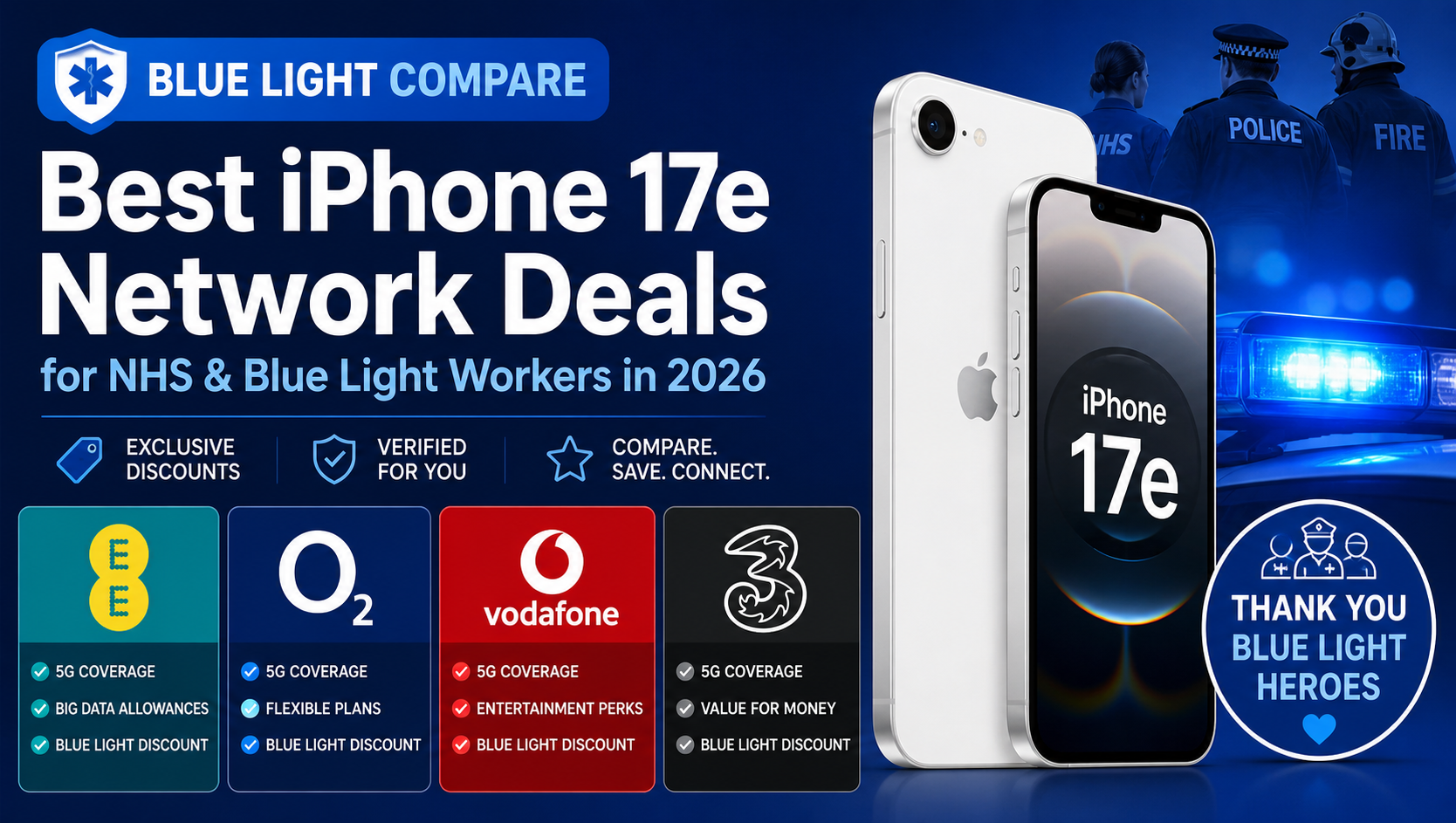


The iPhone 17e launched in March 2026 at £599 for 256GB and £799 for 512GB, making it Apple's most affordable entry into the iPhone 17 family. For NHS staff, paramedics, firefighters, police officers, and armed forces personnel, that SIM-free price is rarely the best way to buy.
UK networks are competing for blue light workers, and the right contract can take a meaningful amount off the total cost over two years. This guide covers each network's specific discount scheme, what it actually saves on the iPhone 17e, and which network suits which type of worker.
Network discount terms change regularly. Always verify the current offer directly with the network before signing.
Why the Network Decision Matters
When buying on contract, the true cost is the total paid over the full term, usually 24 months, not the headline monthly figure. A network offering 25% off a £30 airtime plan saves £180 over two years, a real and consistent reduction rather than a one-off incentive.
For blue light workers there is also an eligibility layer worth understanding. Some discounts are NHS-only. Others cover the full Blue Light Card community, which includes police, fire, ambulance, prison service, armed forces, RNLI volunteers, and social care workers.
EE: 20% Off Airtime
EE offers 20% off the monthly airtime plan for NHS staff, emergency services, and social care workers through its Perk scheme. The discount applies to the airtime element only, not the device repayment, on Flex Pay contracts and 12 or 24-month SIM-only plans.
The same 20% discount can be extended to up to four additional accounts for friends or family members.
Verification is handled through EE's Perk portal using a valid NHS email address or NHS photo ID. Emergency services staff can verify through their employer ID.
EE leads the UK on 4G and 5G coverage breadth, which is a genuine practical consideration for NHS workers commuting between hospitals, ambulance crews covering rural areas, or fire officers attending incidents in low-signal zones.
With the 20% discount applied, the saving adds up meaningfully across a 24-month contract. EE also includes Apple TV+ for six months free on selected plans.
One thing to note: 20% is slightly lower than the 25% offered by O2 and Vodafone, and EE tends to price plans higher before any discount is applied.
Best for: Paramedics, rural firefighters, mountain rescue teams, and anyone whose role takes them outside cities where network coverage matters most.
O2: 25% Off Airtime
O2's NHS discount runs through its O2 Open scheme, accessed via Health Service Discounts at healthservicediscounts.com. NHS staff receive 25% off the airtime element of any pay monthly contract on plans of 3GB or above, or 15% off plans below that threshold.
O2 splits monthly bills into two parts: a device repayment and a usage plan covering minutes, texts, and data. The 25% discount applies only to the usage plan. On a bill of £15 device plus £20 airtime, the discount brings the airtime down to £15, saving £60 a year.
Verification requires an NHS work email address or payslip through Health Service Discounts. No Blue Light Card subscription is needed, which removes a small but real cost.
O2 uses a split contract structure called O2 Refresh, where the device and airtime are separate agreements. This means the handset can be upgraded mid-contract without paying early termination fees on the usage plan, which has practical value for shift workers who need to swap phones at short notice.
O2 is among the first networks to stock the iPhone 17e across both storage options, and the O2 Open discount makes the iPhone 17 Pro Max particularly compelling for NHS staff who want the top-tier model with the highest percentage saving. The O2 Priority app also gives members access to presale event tickets, restaurant deals, and exclusive offers.
On the downside, O2's coverage trails EE in some rural areas, and the NHS route is for NHS workers specifically. Emergency services staff should access the discount through Blue Light Card instead.
Best for: NHS nurses, doctors, admin staff, and allied health professionals who want the highest percentage discount and flexible upgrade terms.
Vodafone: 25% Off Airtime
Vodafone matches O2 with a 25% discount on 24-month handset airtime plans for NHS staff and blue light workers, or 20% on 12 and 24-month SIM-only and tablet plans. The discount applies to the airtime portion of the monthly cost, not the device repayment.
The standout feature of the Vodafone scheme is household sharing. The same 25% discount can be extended to up to five additional connections, making it particularly valuable when multiple people in a household are due an upgrade at the same time.
Vodafone covers a broad range of workers through its Advantage scheme, including NHS staff, military personnel, and social care workers. Verification is done online using an NHS email address, Blue Light Card, employer ID, or a letter from an employer.
One small but worth-knowing catch: Vodafone automatically adds a free three-month trial of Secure Net to new contracts. After the trial period, it charges £1.30 a month unless cancelled through the Vodafone app. Worth doing on day one.
Vodafone's 5G network covers most major UK cities and towns, and the VeryMe rewards app offers discounts, prize draws, and cashback from selected retailers.
As with O2 and EE, the discount applies to the airtime element only, not the device plan. Coverage also falls slightly behind EE in very rural areas.
Best for: Blue light workers buying for the whole household, where the five-account sharing benefit makes Vodafone's scheme the most valuable of the three.
Three: Blue Light Card Deals
Three does not run a structured NHS or blue light discount scheme in the same way as EE, O2, or Vodafone. However, Blue Light Card holders can access exclusive data-heavy plans through the Blue Light Card portal, historically including 150GB deals at significantly reduced monthly prices. These offers change regularly and are worth checking in the Blue Light Card app before committing elsewhere.
Three's headline advantage is base pricing. Even without a blue light discount applied, Three's plans often undercut the post-discount rates available on the other three networks. Three also includes Go Binge on selected plans, which means free data for Apple TV+, Netflix, Disney+, and Spotify.
The coverage trade-off is worth taking seriously. Three's 5G footprint is the smallest of the four major networks, and coverage can be unreliable in rural areas, on motorway corridors, and inside some hospital buildings. Checking Three's coverage map at both home and workplace before signing is essential.
Best for: City-based workers on a tight budget who want maximum data and are confident in Three's coverage at their key locations.
SIM-Only as an Alternative
For anyone who already owns an iPhone 16, iPhone 15, or 16e in good condition, a SIM-only route is worth considering. The iPhone 17e can be bought SIM-free at £599 for 256GB directly from Apple, then paired with a monthly rolling SIM plan.
NHS and blue light discounts apply to SIM-only plans on EE, O2, and Vodafone in exactly the same way as full contracts. Apple's 0% finance option also allows the iPhone 17e to be paid from around £24.95 a month over 24 months with no interest, leaving full freedom to choose the cheapest SIM-only deal available and switch networks whenever a better offer appears.
Key Checks Before Signing
Annual price rises apply across most major networks each April, and on a 24-month contract those increases compound. The cost in months 13 to 24 is the figure that matters, not the opening rate.
All three structured discount schemes, EE, O2, and Vodafone, apply their reductions to the airtime portion of the bill only, not the device repayment. Asking for a clear split between the two costs before signing makes the real saving easier to calculate.
Coverage inside hospitals varies significantly. Thick walls and underground corridors affect all networks differently, so checking coverage at a specific workplace, not just a home postcode, is always worth doing.
Most networks and Apple's Trade In programme offer credit for existing handsets. An iPhone 14 or 15 in good condition can reduce the cost of an iPhone 17e by £100 to £200, and checking that value before signing can make a meaningful difference to the total outlay.
Finally, the best blue light deal is not always the one marketed as such. Comparing the NHS or blue light offer against the best publicly available deal takes only a few minutes and occasionally reveals a standard promotion that comes in lower than the discounted rate.
Prices and discount percentages reflect information available as of May 2026. Network schemes are subject to change, so always verify the current offer with the chosen network before signing.