Finding the latest deals…
iPhone 17e vs iPhone 16 – Is It Worth Upgrading in 2026?

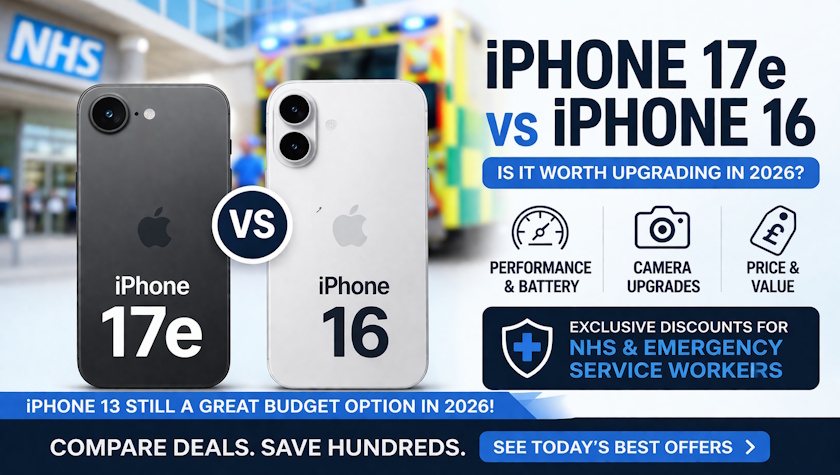


The iPhone 17e and iPhone 16 sit at similar price points and share a 6.1-inch OLED display, the same 48MP main camera, and identical 8GB of RAM. On paper, the gap between them looks narrow. In practice, there are meaningful differences worth understanding before committing to a contract.
This guide covers the key differences across performance, camera, battery, display, and price, so the decision is based on real trade-offs rather than marketing language.
What the iPhone 17e Brings to the Comparison
The iPhone 17e launched in March 2026 at £599 for 256GB, which is £100 less than the iPhone 16's starting price for the same storage tier. The iPhone 16 starts at 128GB for its base price, so the 17e effectively delivers double the entry storage at a lower cost.
The 17e runs Apple's A19 chip, the same processor found across the iPhone 17 family, compared to the A18 in the iPhone 16. Both chips are built on a 3nm process and both handle everyday tasks without any perceptible difference, though the A19 carries a performance advantage in demanding tasks and extends the device's useful lifespan for software support.
The 17e also introduces Ceramic Shield 2 on the front glass, offering three times better scratch resistance than the standard Ceramic Shield on the iPhone 16.
Where the iPhone 16 Still Has the Edge
The iPhone 16 holds a clear advantage on the camera system. It carries a dual rear camera setup, adding a 12MP Ultra Wide lens to the main 48MP Fusion camera, which enables macro photography, spatial photo and video capture, and Cinematic mode video recording. The iPhone 17e has a single rear camera and no Ultra Wide, which is the most significant practical limitation for users who shoot video or regularly use the wide-angle perspective.
The iPhone 16 also includes a Camera Control button, a dedicated hardware shortcut for the camera app, and uses the Dynamic Island rather than the notch design carried over in the 17e from the iPhone 13 and 14 era.
Display brightness is another area where the iPhone 16 leads. The iPhone 16 reaches up to 2,000 nits outdoors and 1,600 nits peak HDR brightness. The iPhone 17e sits at 800 nits typical brightness and 1,200 nits peak HDR, which is comfortable for indoor use and overcast conditions but noticeably dimmer in direct sunlight.
On connectivity, the iPhone 16 supports Wi-Fi 7, Thread, and a second-generation Ultra Wideband chip, enabling features like AirTag Precision Finding. The iPhone 17e is limited to Wi-Fi 6 and carries no UWB chip or Thread support.
Battery Life and Charging
Battery life is one area where the newer model pulls ahead. The iPhone 17e delivers up to 26 hours of video playback, four hours more than the iPhone 16's 22 hours, aided by the efficiency of the A19 chip and Apple's C1X modem.
The iPhone 16 recovers some ground on wireless charging speed, supporting 25W MagSafe compared to the 17e's 15W cap. Both phones reach 50% charge in around 30 minutes via wired USB-C.
Price and Contract Value
The iPhone 17e starts at £599 SIM-free for 256GB. The iPhone 16 starts at a higher price for the same storage, and the price gap widens further when comparing equivalent configurations.
On contract, the difference in monthly cost can be small depending on the network and deal in question. NHS staff and blue light workers can apply discounts from EE, O2, and Vodafone to either handset. Comparing SIM-only plans alongside full contracts is often the most effective way to find the lowest total cost across 24 months.
Who Should Choose the iPhone 17e
The iPhone 17e makes the stronger case for anyone who prioritises performance, storage, and battery life at the lowest possible price. The A19 chip, 256GB base storage, 26-hour battery, and Ceramic Shield 2 screen all represent genuine improvements over the iPhone 16 at a lower starting cost.
It suits most everyday users well: those who call, message, stream, and use social media regularly, and who do not rely heavily on an Ultra Wide camera or need the brightest possible display outdoors.
Who Should Choose the iPhone 16
The iPhone 16 is the better choice for anyone who uses the camera system as a priority. The Ultra Wide lens, macro mode, Spatial video capture, and Camera Control button add up to a meaningfully more versatile photography and video setup.
It also suits anyone who values the Dynamic Island, the brighter outdoor display, Wi-Fi 7, or AirTag Precision Finding with the UWB chip.
Upgrading From an Older iPhone
Anyone moving from an iPhone 13 or earlier will notice a significant step forward with either device. The A19 in the 17e and A18 in the 16 both represent a substantial performance increase over chips from two or more generations ago, and both support Apple Intelligence features fully under iOS 26.
Moving from an iPhone 16 to the 17e is unlikely to feel like an upgrade in everyday use. The camera system takes a step back, the display is dimmer, and the design feels older. The performance gain and storage increase are unlikely to justify the switch for current iPhone 16 owners.
Deals on both handsets change regularly, so checking current contract pricing across networks before deciding remains the most reliable way to ensure the numbers work in practice.